






<img height="1" width="1" style="display:none;" alt="" src="https://px.ads.linkedin.com/collect/?pid=5472956&amp;fmt=gif">


A PLAYBOOK FOR CAPACITY, INFRASTRUCTURE & INTEGRATION


Course Scheduling:
A Strategy to Support Student
Success Outcomes

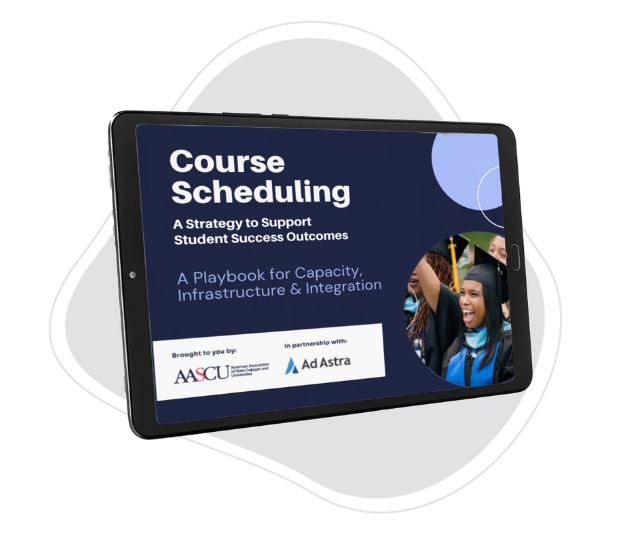
AASCU’s latest publication provides actionable strategies to streamline course scheduling, help students graduate on time, and remove barriers to degree progress. Discover how to optimize your institution’s course scheduling process. 

AASCU Jan 2025 Report-1


The course schedule is often overlooked as a metric for
and lever to improve student success. 

Through AASCU’s work with the Academic Planning for Equitable Student Success cohort, an initiative funded by The Ascendium Education Group , eleven institutions sought to improve the infrastructure and data capacity to optimize strategic course scheduling aimed at closing gaps in degree velocity (the pace at which students complete their degrees). The playbook is a guide for any institution interested in levering their course schedule as a strategy for improving student success. It introduces project phases designed to drive innovation and momentum, project management strategies, and relevant metrics, to support the teams empowered to do this work. This playbook emphasizes field insights and experiences to amplify key lessons, build institutional knowledge, offer actionable steps to support a student-centered course scheduling strategy, and encourage team and individual reflection. 
 

Helping our member institutions reengineer their course scheduling policies and practices to put students at the center is a critical component of AASCU's strategy to scale student success. The course schedule is the engine of degree completion. You simply cannot drive better outcomes without a course schedule designed with student success in mind. 


Vice President of Academic Innovation and Transformation | AACRAO

More about our partnership with AASCU

The Student-Centered Course Scheduling Initiative | A National Effort to Make Course Scheduling Work for Students


Funded by a $2.4 million grant from Ascendium Education Group, the Student-Centered Course Scheduling initiative includes 20 regional public universities across the U.S. receiving technical assistance from Ad Astra. The effort builds on the proven success of an 11-institution pilot conducted from 2022 to 2024, which demonstrated the power of student-centered scheduling to remove barriers and improve student progress.


AASCU Updated Logo
ad_astra transparent

Participating Institutions

Central_Connecticut_State_University_Logo
Chicago_State_University_newest_logo
Eastern_oregon_univ_logo
Fresno-State-Logo-R-horizontal_2_
MTSUWordmark
San José State University logo with blue and gold typography, symbolizing institutional identity in higher education.
tamucc_condensed_blue
001_TAMUSA-Logo_Updated_Stacked-Black
University_of_Guam_logo.png
University_of_North_Georgia_logo
LOGO_UTRGV
western-kentucky-university-logo-1-1

Fast Facts

11

Participating Institutions in the APLES cohort

x%

xxxxxxxxxxx

x

xxxxxxxxxxx

Project Solution Focus Areas


“I believe when we can place the data in front of others, it becomes undeniable that changes must be made.”
- Fresno State University

hesi 3@4x

Meeting Pattern Analysis

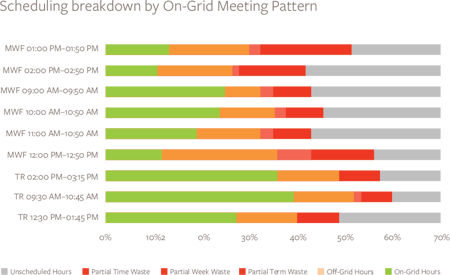
A foundational component of scheduling infrastructure is the meeting pattern grid. Sometimes called a block schedule or clock schedule, the meeting pattern grid defines the standard patterns that an institution uses to offer sections.  Scheduling outside of the standard grid can impact all students, but can it impact low-income students and students of color more?  Institutions in the cohort found that a review of section adherence to the standard grid can be a key student success strategy.

Imagen en Popup ×
es-academic-scheduling

General Education Scheduling

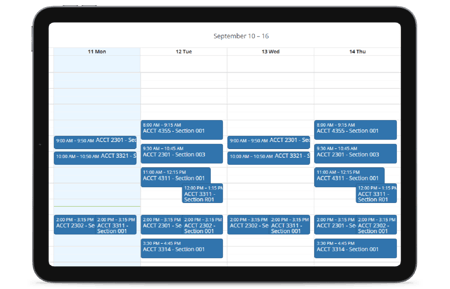
Most students need to start by taking key general education courses in their first semester and year of college, but for most four year institutions, these courses are the most bottlenecked during registration.  Students can often register for a schedule but is it the right schedule for them? Institutions in the cohort are addressing course scheduling bottlenecks to ensure students have access to the required courses in the first year.

Imagen en Popup ×
sc-dfw-analysis

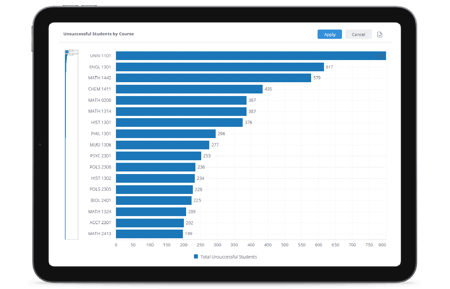
DFW Analysis and Course Combinations

Institutions often analyze the number of students who make a grade of D or F or withdraw from a course when analyzing student success.  This data can be used to determine instructional supports required for individual courses.  Within the cohort, institutions are analyzing courses that when taken together are more likely to result in a negative outcome.  While this initiative can help advisors to provide excellent guidance in the course selection process, it also can assist institutions in revising their pathways or student plans to encourage student success. 

Imagen en Popup ×
sc-early-momentum-degree-velocity

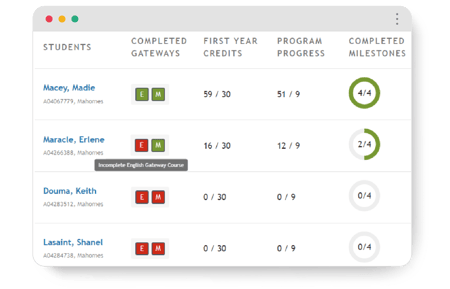
Momentum Year

The data from Ad Astra and Complete College America (completecollege.org/momentum/) clearly show the impact of early momentum on student success.  Institutions in the cohort are utilizing data to determine students who are not on track to complete the key English and Math gateway courses in the first year with the intention of encouraging registration in a future semester.  The data indicates that students of color and low income students are less likely to complete Momentum Year requirements and ensuring seats are available for these students can be an important way to improve momentum and Degree Velocity®. 

Imagen en Popup ×
HESI Benchmark Image - Updated

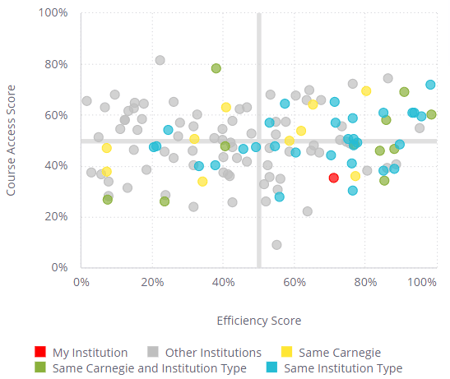
Data Socialization and Awareness

No one wants to offer sections with less-than-optimal enrollment and no one wants to inhibit a student’s ability to get a section that they need, but every schedule has some elements of these problems.  Course scheduling is a complex activity on all campuses.  One of the early steps in this project was to provide scheduling effectiveness benchmarks.  These benchmarks allow institutions to see where they stand relative to goals in the industry, and making key scheduling stakeholders aware of the data can be a necessary first step in accelerating the need for change. 

Imagen en Popup ×

Success Stories

550+ institutions. 4.5 million students. And counting.

Learn how institutions just like yours are achieving their outcomes with smarter planning and scheduling solutions.
Efficient scheduling for 15,000+ unique class sections a year.
item-1

Efficient scheduling for 15,000+ unique class sections a year.

Discover how the University of Missouri-Kansas City improved student success through smart academic course scheduling.

icon-file-ad-astra
Administration-Building-NW

8% increase in retention year over year
See how Northwest Missouri State University leveraged Ad Astra’s scheduling tools to create operational efficiency, transparency across departments, and ultimately help improve student outcomes.

icon-video
ad-astra

$350k savings during a multi-year configuration of academic building resources

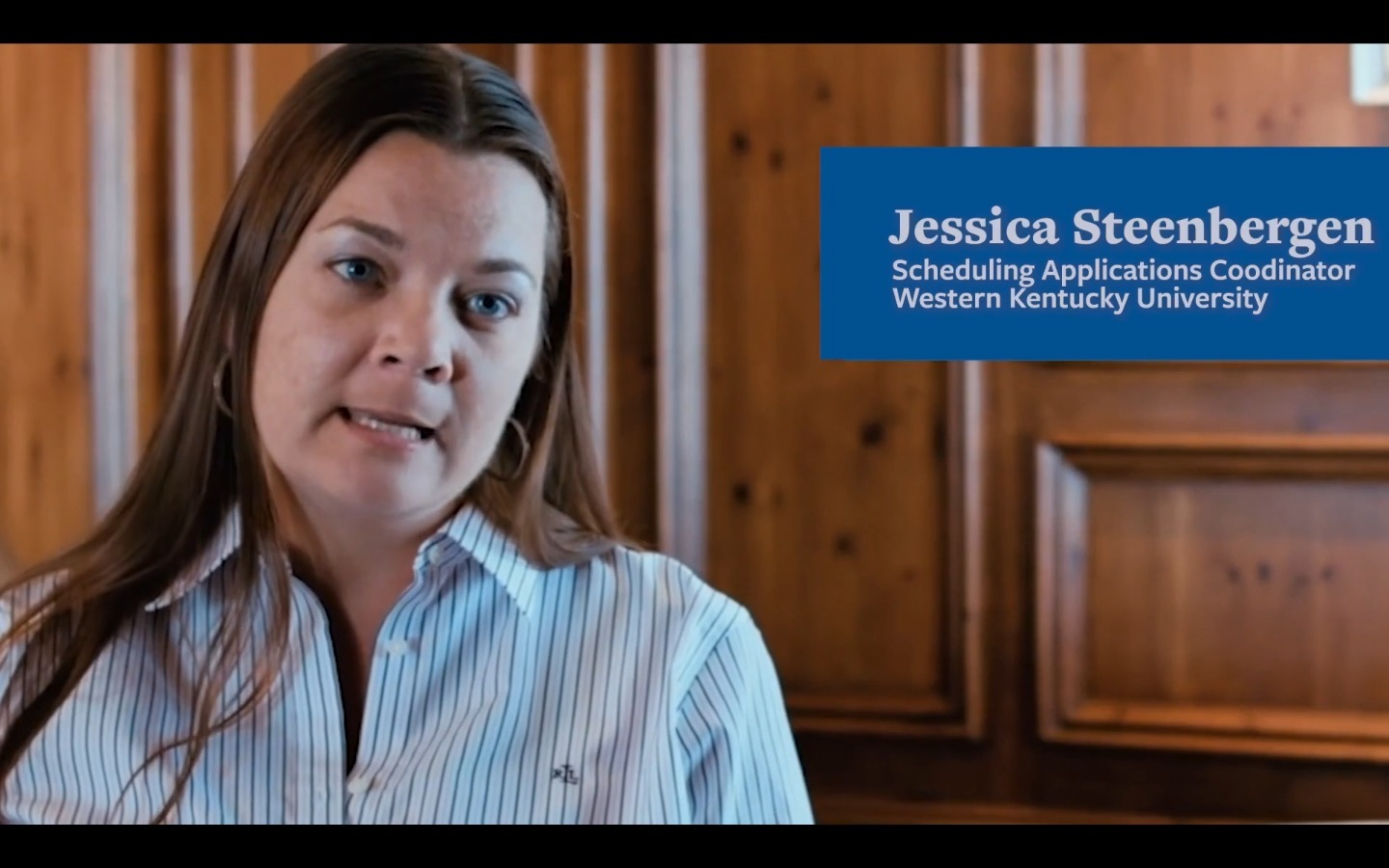
When Western Kentucky had to reallocate 156 rooms due to a building shutdown, Ad Astra powered fast rescheduling decisions using room and resource data – ultimately helping the university achieve a six-figure savings.

icon-video
lamar-university-campus

“Six-year graduation rates improved by 6% and average student contact hours improved by 4.2%”

Discover how Lamar University achieved something many universities haven’t been able to do: Multi-term scheduling centralized within their registrar’s office. But the story doesn’t end there.

Resources for smarter scheduling and planning.

Explore tools, strategies, and reports from experts in higher education academic operations.

Smart-Scheduling-Handbook-Cover-Photo

The Smart Scheduling Guidebook

A guide to tackling the four essential pillars required to create efficient, financially sustainable schedules that promote equitable student retention and completion.  This guide provides step-by-step, practical advice to help level up your scheduling strategies to accelerate progress.

2024_benchmark-cover-image

2024 Student Benchmark Report

This comprehensive analysis of more than 1.3 million students explores the impact of progress bands, flexible schedules, and financial sustainability on retention and completion. Discover key insights, including the pivotal role of "taking one more course" on timely degree completion.

Ready to learn more about how Ad Astra can help you streamline processes and achieve a student-centered schedule?

Copyright © 2025 | Ad Astra Information Systems® | All Rights Reserved | Privacy Policy | API Terms of Service