










<img height="1" width="1" style="display:none;" alt="" src="https://px.ads.linkedin.com/collect/?pid=5472956&amp;fmt=gif">

ASPIRE26 registration is officially open! Join us in Kansas City this fall to LEVEL UP your scheduling game >>>

Background Banner Background Banner
dona-ana-campus

CASE STUDY | DOÑA ANA COMMUNITY COLLEGE

Ad Astra tools deconflict the schedule to improve cross-departmental collaboration

  • 284% increase in student credit hours
DACCLogoTransparent
Location: Los Cruces, NM
Enrollment: Over 14,000 learners

Type: Public, Two Year

Accreditation: HLC
Outcomes: Student Success
Products in Use:  Academic Scheduling, Student Demand Forecasting, Early Momentum/Degree Velocity ®, Program Pathway Management

The Objective

Increase Ad Astra users to enhance enrollment management and improve course offerings

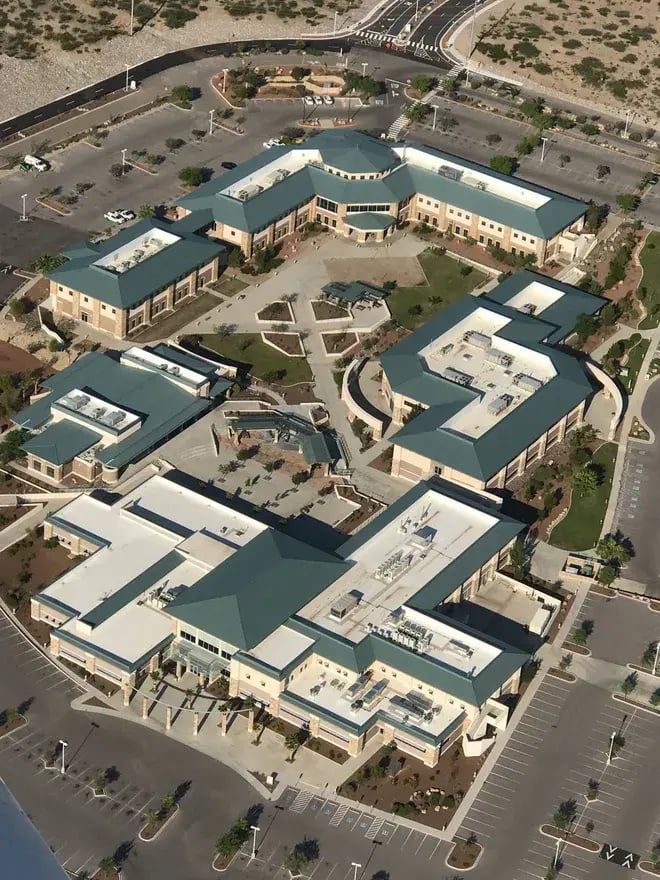
Doña Ana Community College, Los Cruces, N.M., is a branch of the New Mexico State University system. The institution, which serves students in Doña Ana County and neighboring communities, employed roll-over scheduling that was completed individually by department chairs across the multi-campus institution.


Siloing within this scheduling modality did not meet the needs of its non-traditional students, aged 20-24, who needed flexible scheduling in multiple modalities outside of the traditional time block of 9–12. This practice also left the institution lacking the necessary data to show what they currently had and what they needed to improve scheduling.


Shannon Bradley, Associate Vice President for Academic Affairs, sought a way to expand upon current usage of Ad Astra to guide the college in better alignment of pathways to improve course offerings for its students.


“It was a siloed process where the schedule was rolled over fall-to-fall and spring-to-spring,” Bradley said. “By using the Ad Astra tools available to us and getting more people involved, we could improve collaboration between the departments and give students the flexible schedule they need.”

Background The Solution

The Solution

Expand usage of Ad Astra capabilities to drive pathway-aligned, deconflicted scheduling decisions


Excited by the possibility of what Ad Astra data could uncover, Bradley assumed the role of site administrator and invited department chairs and program directors across multiple campus centers to participate in two days of Ad Astra training. During this time, attendees saw data demonstrating Degree Velocity ® , pathways, and places where barriers existed for students within the system.


“Many of us were horrified at our Degree Velocity® because we don’t realize how long it takes for students to complete if they have barriers.” Bradley said.


As a branch of the University of New Mexico system, the institution worked with Ad Astra to input the entire catalog of pathways, including associate of science and associate of arts degrees, applied associate degrees and certificate programs. The work also looked at two- and four-year pathways of what students need to complete from high school to community college and community college to a bachelor’s degree.


With these results, the college embarked on a Smart Scheduling ™ project to look at ways to deconflict the schedule at two of its South County rural centers. The goal was to achieve a fully deconflicted schedule for Fall 24, including looking at pathways for the 16-week semester. Project success found enrollment up, a 284% increase in student credit hours because of the deconflicted schedule.
 

Another project within the college’s Gadsen Center explored deconflicting a schedule containing both 8-week mini semester courses and 16-week classes. The result, a small drop in student credit hours, confirmed the hypothesis that students do not do well with a mix of schedules.


In Spring 26, the institution will embark on a project to deconflict both main  campus schedules with a goal of seeing an increase in student credit hours and enrollment at the two locations. The institution will also look at DFW rates using the Ad Astra DFW dashboard holistically across programs to build best practices for instructors struggling with DFW rates.


Use of Ad Astra data has also assisted the institution with swirling, a term used when students would leave the Doña Ana campus to go to other institutions within the system to take a course. Student Demand Forecasting from Ad Astra advised offering more sections of the popular medical terminology course in its pre-Health Sciences area due to demand. By increasing the number of sections from eight to 13, Doña Ana was able to reduce swirling by limiting the number of students leaving to take the terminology class at another institution within the system.


“We couldn’t have done this work without Ad Astra to help us bring together the capabilities of our department chairs and program directors to enhance collaboration on scheduling and to help us increase the success of our students in their pathways,” Bradley said.

Explore our solutions
Single Quote
Employing Ad Astra solutions more thoroughly has helped with collaboration between the departments. We still have silos, but we are breaking these down more efficiently by working together and using these tools."

SHANNON BRADLEY
Associate Vice President for Academic Affairs


Background Form Background Form

School Background

Doña Ana Community College, Los Cruces, N.M., has five campus centers, two main campus centers, and three satellite locations located throughout Doña Ana County and neighboring communities. The Hispanic-serving institution is 70% Hispanic and serves a largely non-traditional student population. Doña Ana Community College is a branch of New Mexico State University. The community college is accredited by the Higher Learning Commission.

Star

Download the PDF to easily save or share this case study anytime.

Copyright © 2026 | Ad Astra Information Systems® | All Rights Reserved | Privacy Policy | API Terms of Service