









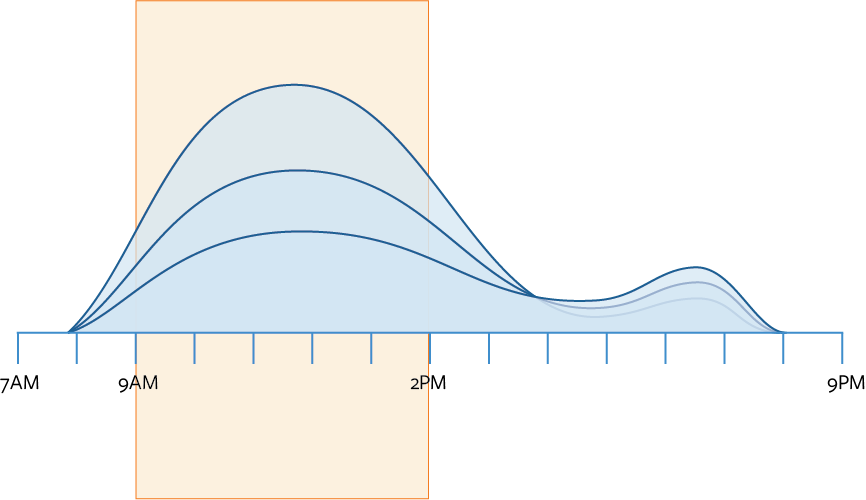
The HESI Prime Ratio is an attempt to offer courses when students are most likely to be on campus and should fall between 45% and 67%. A value of 50% means that 5 in 10 course offerings fall inside the primetime window, as shown in the example below to be 9 AM to 2 PM.
If the Prime Ratio, the percentage of hours scheduled during primetime hours when student demand is highest, exceeds a set percentage, post-traditional students won’t have access to the courses they need. Consider student demographics to maintain a balance inside and outside of the primetime window.
If the Prime Ratio, the percentage of hours scheduled during primetime hours when student demand is highest, exceeds a set percentage, post-traditional students won’t have access to the courses they need. Consider student demographics to maintain a balance inside and outside of the primetime window.
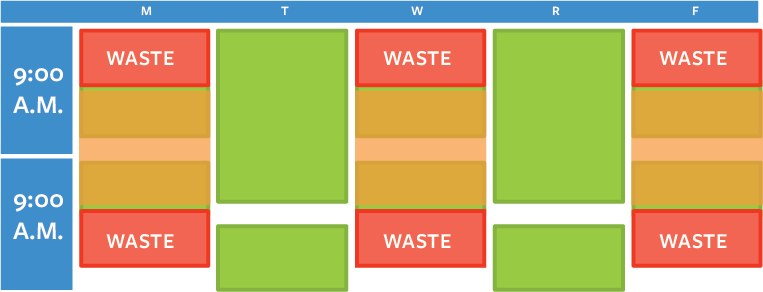
If students are unable to get the courses they need, when they need them, then they may have to delay their graduation by a semester or longer. Avoid placing roadblocks on students by minimizing off-grid waste, the percentage of capacity wasted by scheduling sections on nonstandard meeting patterns.
The HESI Meeting Pattern Analysis dashboard can provide further insight into off-grid waste. Examine courses not adhering to the meeting pattern grid and enact scheduling policy/guidelines to discourage off-grid scheduling. When an institution reduces their off-grid waste in the schedule, their institution will tend to see increases in the enrollment ratio, as the same number of students can take more courses.
The HESI Meeting Pattern Analysis dashboard can provide further insight into off-grid waste. Examine courses not adhering to the meeting pattern grid and enact scheduling policy/guidelines to discourage off-grid scheduling. When an institution reduces their off-grid waste in the schedule, their institution will tend to see increases in the enrollment ratio, as the same number of students can take more courses.
High enrollment ratios (over 85%) make it difficult for students to register, which could impact student retention in the short- and long-term. Leverage enrollment ratio data to highlight first-year overloaded courses and look for opportunities to shift resources from low-demand courses to high-demand in the same subject areas and determine if there’s justification for additional sections.
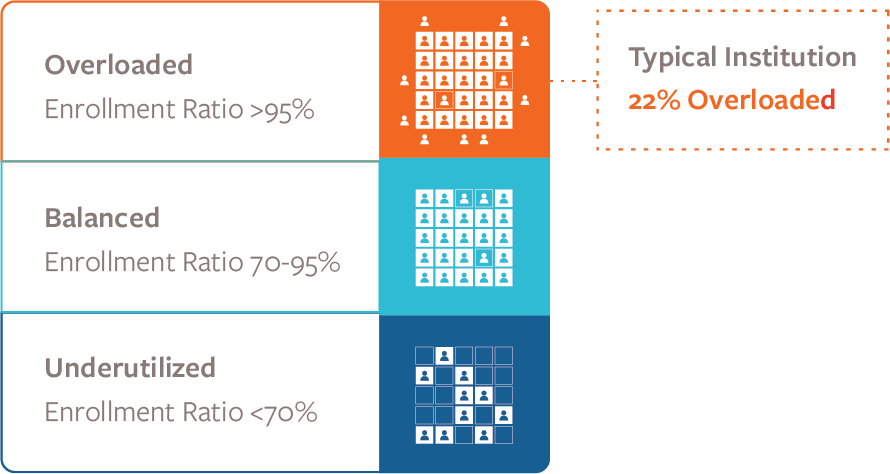
On the flip side, if course offerings are underutilized (below 70% capacity at enrollment date), institutions may not be optimizing their scarce resources of facilities and faculty to meet student needs. If an institution offers a course that is in low demand, it often comes at the expense of offering another course that would better align with student needs. Consider underutilized courses and reduction candidates for reallocation opportunities.
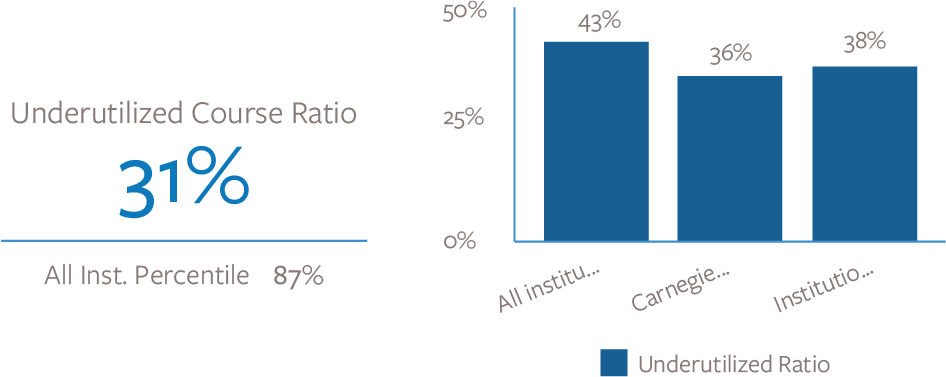
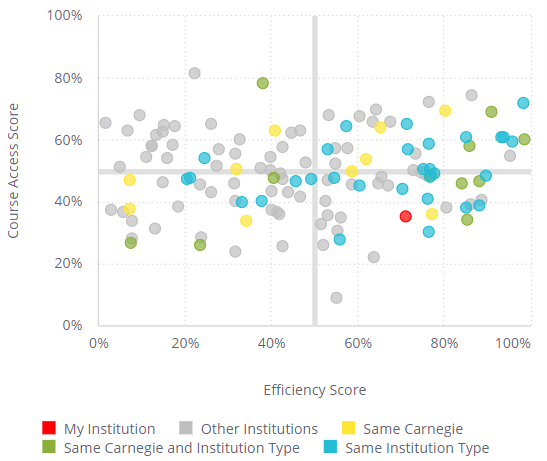
The HESI provides a continuous improvement process designed to help your institution benchmark data points among similar units from comparable colleges and universities. Each of the metrics above and more are calculated to plot your institution and provide paths of recommendations to improve. By measuring this data together, you can improve your enrollment ratio, retention, time-to-completion, and graduation rates to help college or university move forward.

Monitor Enrollment in
Real-time
With real-time data at your fingertips, you can identify overfilled or under-enrolled sections early and take action before issues impact students.

Forecast Student Demand
Quickly add or adjust course sections to meet fluctuating demand, helping students get the classes they need while improving fill rates and reducing scheduling bottlenecks.

Optimize Institutional Resources and Offerings
Ensure the right courses are offered at the right times, in the right spaces, to maximize utilization and support institutional goals.

Save 30+ Hours a Month
By automating key aspects of course scheduling and academic planning, institutions can save anywhere from 30 hours per month to 80 hours per semester—freeing up staff to focus on higher-value, strategic initiatives.